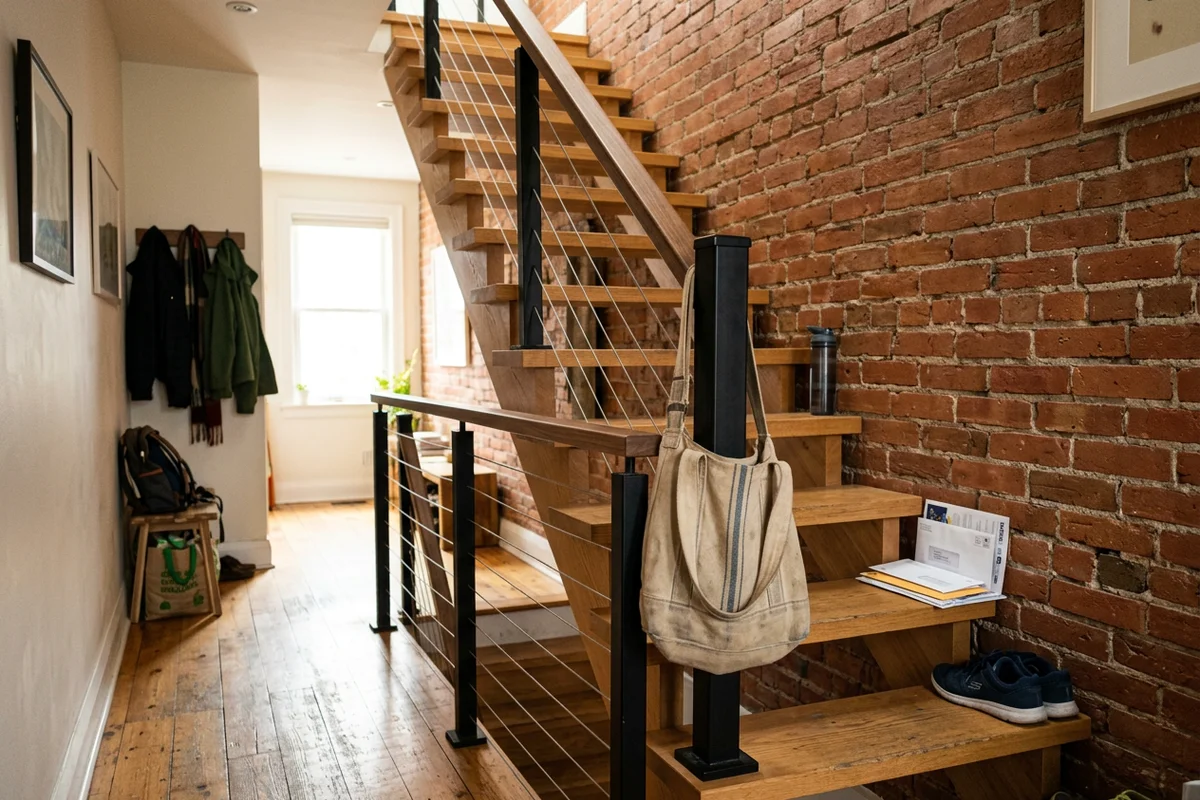
Stainless cable stair railing with black posts and a walnut top rail in a Leslieville home

Cable Stair Railings Toronto

316 stainless steel cable in vertical or horizontal runs, with terminal posts and tension hardware set so the cables pass the 4-inch sphere rule. A light, modern railing for open-concept homes.

Published price band

$2,800 to $6,500

per railing run

About 2 weeks for hardware, then 1 to 2 install days

Same-day response Monday to Friday. Written quote within 48 hours.

  • 22 Years Staircase work across the GTA since 2004
  • WSIB Clearance Clearance letter available on request
  • $2M Liability General liability insurance, COI on request
  • Ontario Registered Ministry of Labour construction registration

Fixed two-person WSIB crew on every install.

Scope of Work

What's Included in Cable Railings

Stainless steel cable railing systems for modern open-concept homes. Includes vertical or horizontal cable runs, tension hardware and terminal posts. Compliant with the Ontario Building Code 4-inch sphere rule when spaced and tensioned correctly.

  • Vertical or horizontal cable runs
  • Tension hardware and terminal posts
  • Spacing and tension checked against the 4-inch sphere rule
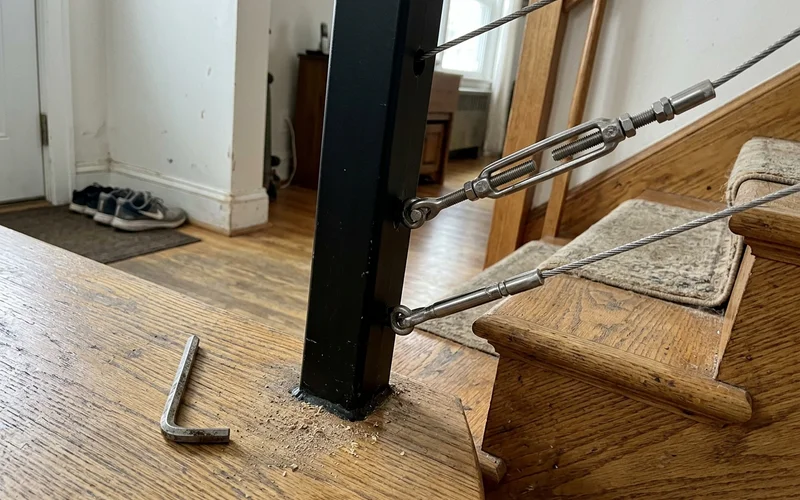
Swaged cable fittings and tension hardware at a terminal post

Have you ever felt like your staircase is just a dark, heavy blockade in the middle of your home? We hear this exact complaint from homeowners all over the GTA every single week.

Upgrading to sleek cable stair railings can completely solve this problem by letting natural light pour through.

Our team at Staircase Renovation Toronto provides a massive visual upgrade for your main floor. The most popular projects we handle throughout Toronto include:

  • Vertical and horizontal stainless cable runs.
  • Heavy-duty cable landing guards.
  • Beautiful wood-topped cable railing systems.

We are proud to back every installation with 22 years of staircase work across the GTA. Every project features premium 316 stainless steel cable with swaged fittings and turnbuckle tension hardware between terminal posts.

The Structural Foundation: Our designs specifically control the spacing of intermediate posts so the cable can’t deflect enough to let a 4-inch sphere through. Heavy-duty terminal posts are fixed directly into the stair or floor framing, because they carry the full cable load.

We finish the setup with a graspable top rail in wood or steel, or a separate wall handrail, to meet Ontario Building Code Section 3.4.6. Safety is a major priority, so vertical cable is the standard choice where children live in the home.

Our pricing runs $2,800 to $6,500 per railing run depending on your exact layout. A typical cable job we see in Leslieville or Riverside involves a semi-detached house opened up on the main floor, with a drywall half wall still blocking the stairs from the living room.

We consistently hear that owners want natural light, not endless glass cleaning. The transformation process is straightforward:

  1. Remove the existing half wall.
  2. Set black steel posts deep into the framing.
  3. Run vertical stainless cable under a walnut top rail.
  4. Stain the wood rail to perfectly match the new treads.

Our team carefully tensions everything before the walkthrough to ensure a perfect finish. Let me show you exactly how this modern style can refresh your space.

What Are Cable Stair Railings?

We define a cable railing as a system that uses thin stainless steel wires stretched tight between posts in place of traditional balusters or glass. The cables form the physical guard, a top rail or handrail gives you something to hold, and the structural posts carry the massive tension.

The Stainless Steel Standard: Our preferred material is always 316 marine-grade stainless steel for these systems. This specific grade offers superior corrosion resistance compared to cheaper 304 steel, which is crucial even indoors to prevent tarnishing from hand oils or humidity.

We love this light, modern look because it beautifully suits open-concept homes, industrial lofts, and renovated semi-detached houses. Because the wires are just 1/8 to 3/16 of an inch thick, you barely see them from across the room, and the stair essentially opens up to the space around it.

Our structural engineering focus is entirely on the tension holding those wires tight. A wire that is too loose can easily be pushed apart, creating a major safety hazard.

We use specialized turnbuckles and swaged fittings designed to hold up to 300 pounds of tension per line. That incredible force is exactly why post spacing, cable spacing, and tension hardware must be designed together, not picked separately from a big box store.

Cable Railing Configurations

Our clients have several layout options depending on their stair framing and family needs. The physical configuration changes both the visual appeal and the daily function of your staircase.

ConfigurationLookNotes
Vertical cableClean verticals, like thin balustersHarder to climb, our default with kids
Horizontal cableLong lines parallel to the stairCheck suitability for your location first
Surface-mounted postsPosts on top of treads or floorSimplest install
Fascia-mounted postsPosts on the side of the stringerMore open walkway, more framing work
Wood top railWarm rail over steel postsMost requested finish

We always highlight a few critical details before finalizing a layout design. Here are the most important configuration factors to consider:

  • Vertical vs. Horizontal Lines: Vertical setups eliminate the climbing hazard mentioned in Ontario Building Code Section 9.8.8, making them the safest choice for homes with young kids.
  • Mounting Styles: Fascia-mounted posts attach to the outside face of the stringer, which actually gives you back about three to four inches of walking width on the stairs.
  • Top Rail Materials: A white oak or walnut top rail provides a warm, comfortable grip that beautifully offsets the cold industrial look of the steel.

We guide you through these choices to find the perfect balance of aesthetics and function. The right combination makes a massive difference in your daily living experience.

Cable Railing Cost Guide

Our projects generally run between $2,800 and $6,500 per railing run, but specific choices shift that final number. Installed systems in the Toronto market currently average between $85 and $180 per linear foot for professional quality work.

Cost factorToward $2,800Toward $6,500
Run lengthSingle straight flightFlight plus landing guard
Post mountingSurface-mountedFascia-mounted
Top railSteelWalnut or white oak
AnglesOne pitchTurns and pitch changes
Existing workRemove picketsRemove half wall and patch

We see many homeowners surprised by how much corners and angles impact the budget. Every single turn requires double the tensioning hardware and dedicated termination posts to hold the intense pulling force.

Our installation team spends a significant amount of time precisely calibrating that tension. The labor required to carefully tighten and test each individual strand is a major factor in the final price, ensuring everything passes inspection perfectly.

When Is Cable a Good Choice?

We frequently recommend this style for modern and transitional homes where you want an open stair without the steep price or massive weight of glass panels. It is an incredibly popular choice in Leslieville, Riverside and Roncesvalles semi-detached houses, Etobicoke modern renovations, and Vaughan and Markham open-riser stairs.

The Lighting Advantage: Our crews love installing these in narrow, older Toronto homes because the thin wires let natural sunlight reach into previously dark hallways. The material is less suited to very traditional interiors, where iron balusters naturally fit much better.

We also point out the practical cleaning benefits during our consultations. The thin steel strands do not collect sticky fingerprints or show dust like large glass sheets, saving you hours of tedious wiping.

Cable vs Glass vs Iron

Our clients constantly ask us to compare these three popular open-concept options. Each material offers a very different blend of visual appeal, structural requirements, and long-term maintenance.

CableGlassIron balusters
Price$2,800 to $6,500 per run$3,500 to $9,000 per run$1,500 to $3,800 per staircase
OpennessHighHighestMedium
Weight on structureLowHighLow
UpkeepOccasional tension checkCleaningVery low

We prefer to explain the structural differences before discussing the visual aesthetics. Heavy glass panels can add hundreds of pounds to your stair framing, often requiring extra reinforcement underneath.

Our steel wire systems provide that same airy feeling without burdening the floor joists. The only real upkeep is an occasional check with a tension gauge every year or two to ensure the cables haven’t stretched.

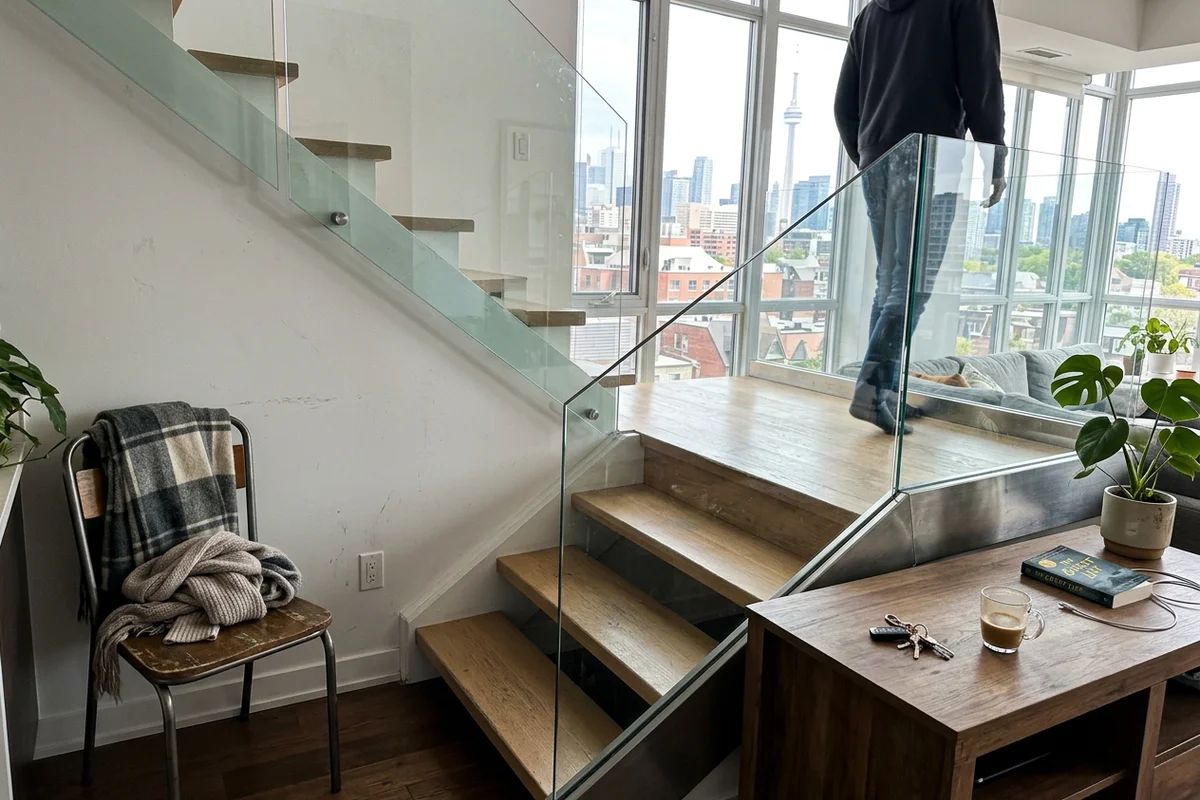
We always encourage you to compare glass stair railings for a fully transparent look, or plan a stunning open-riser stair through custom staircase design. The final choice just comes down to your budget and cleaning preferences.

Cable Stair Railings and the 4-Inch Sphere Rule

Our final inspection process is rigorous because Ontario’s 4-inch sphere rule applies to flexible wire just like rigid balusters. The strict building code test involves two main factors:

  • The Physical Gap: A 100mm sphere must not pass through the cables at any point.
  • The Applied Force: The inspector will push the cables with about 112 pounds of force to ensure they don’t stretch open.

We carefully set the wire spacing, intermediate post placement, and heavy-duty tension hardware together so the railing easily passes this physical test. A common DIY mistake is spacing the posts too far apart, allowing the center of the wires to easily stretch and fail the inspection.

Our installation experts always check the tension again at the final walkthrough to guarantee absolute safety. Wood framing can naturally dry and shift slightly over the first few months, which occasionally requires a quick tightening of the turnbuckles to keep everything up to code.

We love building beautiful, compliant cable stair railings that completely revitalize your home. Reach out today to schedule a quick consultation and get a precise quote for your own staircase project.
Real Costs

How Much Does Cable Stair Railings Cost in Toronto?

What the price covers

All pricing includes a two-person WSIB crew, materials, installation, jobsite protection and final cleanup. Free written estimate before any work begins. No hourly billing, no hidden fees.

A straight single-flight run with surface-mounted posts sits near the low end. Long runs with a landing, wood top rail, fascia-mounted posts or angle changes move toward the top.

  • Terminal and intermediate posts
  • 316 stainless steel cable and fittings
  • Tension hardware and final tensioning
  • Top rail or handrail
  • Spacing checked against the 4-inch sphere rule
  • Written workmanship warranty

Compare every service band on our staircase renovation prices page.

Why Homeowners Pick Us

Why Choose Staircase Renovation Toronto for Cable Railings?

  • Tension done right

    Cable sag is what fails the sphere test. Posts are sized and spaced so tension holds.

  • 316 stainless

    Marine-grade 316 stainless cable and fittings that don't rust or stain.

  • Posts into structure

    Terminal posts carry the cable load, so they're fixed into framing, not just the subfloor.

  • Vertical or horizontal

    We'll show you both and tell you which suits your household.

  • Stair and railing together

    Recap or rebuild treads and install the cable railing as one project.

  • Owner-supervised

    Andriy Kovalenko supervises every install from layout to final tension check.

Clean Site Execution

How Our Cable Railings Process Works

You deal with the person who measures and builds your staircase, from the first visit to the warranty.

  1. 1

    Free In-Home Estimate

    On-site measurement, structural inspection and scope discussion. Andriy or a senior lead attends every estimate. Written quote within 48 hours.

  2. 2

    Design and Material Selection

    Wood species, stain samples against your floor, baluster and railing style. Full material list and shop drawings for approval before anything is ordered.

  3. 3

    Fabrication and Prep

    Straight staircases are cut in our Etobicoke shop; curved work is fitted on site. Several Toronto contractors ship prefabricated stairs from out-of-province suppliers, which limits custom fit. We build to the exact measurements of your opening.

  4. 4

    Installation by Owner-Supervised Crew

    Andriy Kovalenko supervises every install from tread removal through final trim. A two-person WSIB crew works behind dust barriers with floor protection throughout the home.

  5. 5

    Final Walkthrough and Warranty

    We walk every tread, riser, baluster and handrail with you against the written scope, then issue your written workmanship warranty.

Typical timeline: About 2 weeks for hardware, then 1 to 2 install days

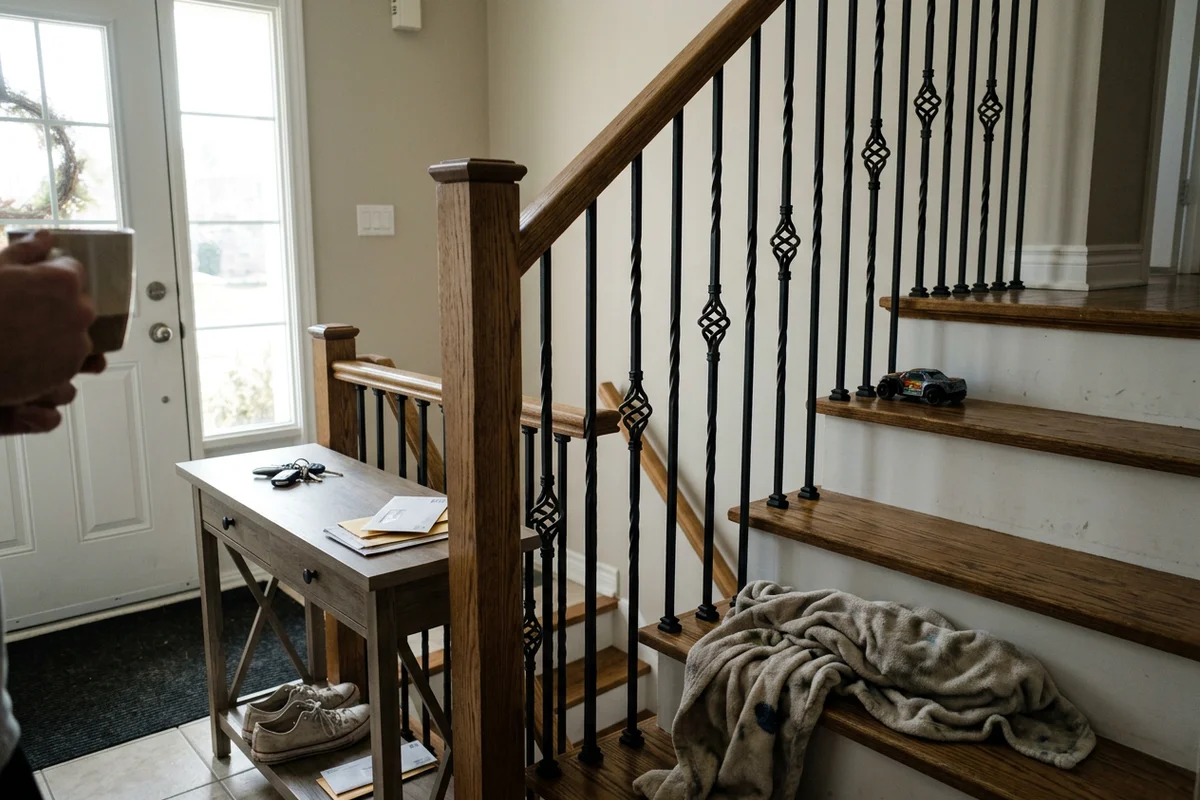
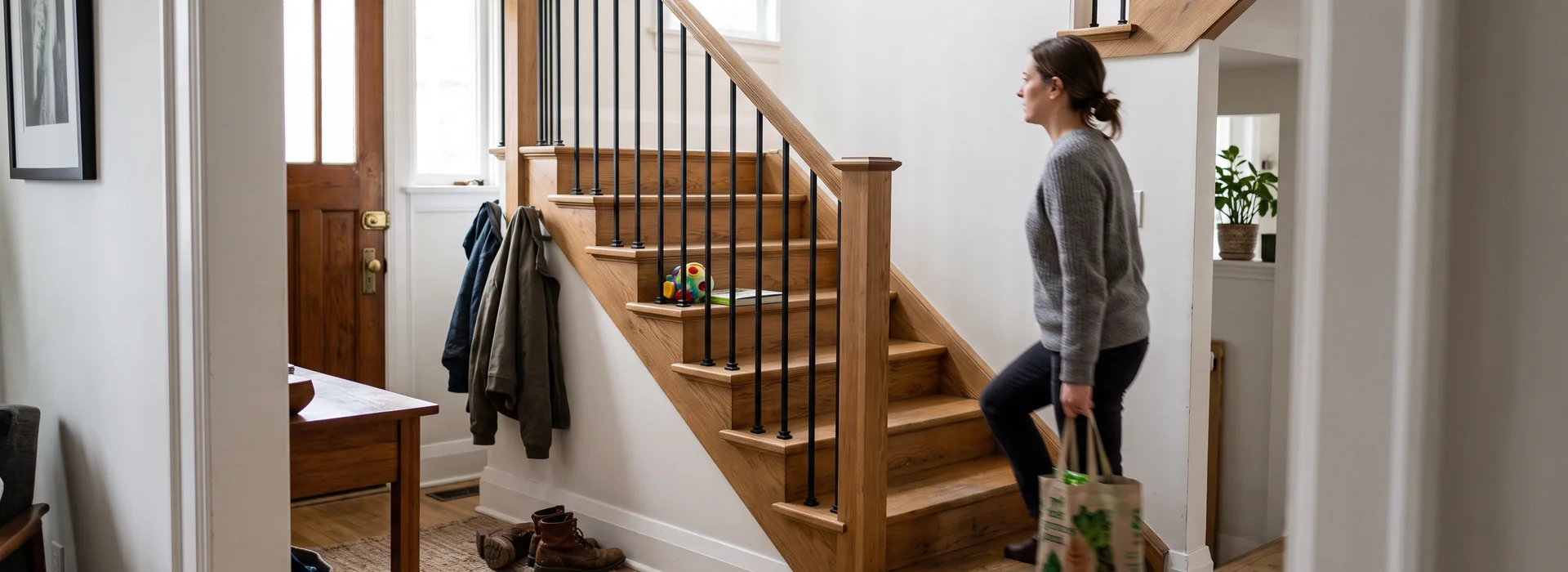
Finished oak staircase with black iron balusters in a Toronto home
Questions About Cable Railings?

Get a Written Cable Stair Railings Quote Within 48 Hours

Andriy or a senior lead measures your stairs and gives you the options with prices. No hourly billing, no hidden fees.

  • Written quote within 48 hours
  • Owner attends every estimate
  • Written workmanship warranty
  • No hourly billing, no hidden fees
Our Work

Click any photo to see it larger.

Before: solid half wall
After: horizontal cable run
Vertical cable option
Tension set and checked
Homeowner Feedback

What GTA Homeowners Say

"Condo management needed the insurance certificate before anyone came in. They sent it the same day, and the glass railing looks like it came with the loft."
Jonathan L.Yorkville, Toronto
"Our curved oak staircase on The Kingsway took six weeks, and Andriy told us that on day one. The iron balusters and the new handrail line up perfectly with the old curve."
Marta K.The Kingsway, Etobicoke
"I turn over units in two buildings. Vinyl capping on painted stairs took one day per staircase and the tenants stopped chipping them."
Rob T.Long Branch, Etobicoke

Homeowner video walkthroughs are coming

We're filming short walkthroughs with past clients in Etobicoke, Rosedale and Scarborough. Until they're posted, ask us for the addresses of recent jobs near you and we'll arrange a look.

Homeowner Questions

Cable Stair Railings FAQs

Are horizontal cable railings allowed in Ontario?

It depends on where they're installed and how the rules are applied to your project, which is why we check before recommending horizontal cable. The Ontario Building Code has provisions about guards that could be climbed in certain residential locations, and horizontal elements can raise that question. Every cable railing also has to stop a 4-inch sphere from passing through under load.

Vertical cable avoids the climbing question entirely and is our default recommendation where there's any doubt, especially with young children in the house. If you want horizontal cable, we'll confirm it's acceptable for your specific stair and location before ordering, and we'll tell you plainly if it isn't.

Do cable railings need re-tensioning?

Occasionally. Stainless cable settles slightly in the first months after install, and seasonal temperature changes affect tension a little. We check and adjust tension at the end of the install. After that, most homeowners find a quick check once a year is enough. Adjusting is done at the tensioner with a wrench, and we show you how at the walkthrough.

How much do cable stair railings cost?

$2,800 to $6,500 per railing run. A straight single-flight run with surface-mounted posts sits near the low end. Long runs with a landing, a wood top rail, fascia-mounted posts or angle changes sit near the top. You get a written quote within 48 hours of the estimate.

How far apart are the cables?

Close enough that a 4-inch sphere can't pass between them when the cable is pushed, which is tighter than the 4-inch spacing on rigid balusters because cable flexes. Post spacing and tension are part of the same calculation.

What's the difference between vertical and horizontal cable?

Horizontal cable runs parallel to the stair and gives a long, clean look. Vertical cable runs from the tread or bottom rail to the top rail, and it's harder to climb. Vertical is our default for homes with young children.

Do cable railings need a handrail?

Yes. A stair needs a graspable handrail under Ontario Building Code Section 3.4.6. On cable railings this is usually a wood or steel top rail, or a separate wall-mounted rail.

Will stainless cable rust?

We use 316 stainless steel cable and fittings, which resists corrosion indoors and in most outdoor settings. Cheaper grades can show surface staining over time.

Can cable railings go on an existing staircase?

Yes, if the posts can be fixed into solid structure. We check the stringer and floor framing at the estimate, because terminal posts carry the full cable tension.

Is cable cheaper than glass?

Usually. Cable runs $2,800 to $6,500 per run and glass runs $3,500 to $9,000 per run. Cable is also lighter, which suits older stairs that can't take a heavy base shoe.

Can you combine a cable railing with a wood top rail?

Yes. Walnut or white oak top rails on black posts are the most requested combination. We stain the top rail to match your treads.

How long does a cable railing take to install?

One to two days on site after the posts and hardware arrive, usually about two weeks after the measure.

Is my cable railing covered by warranty?

Yes. Installation labour is covered by our written workmanship warranty, issued at the final walkthrough.

Free In-Home Estimate

Ready to Price Your Cable Railings Project?

Book a free in-home estimate. Andriy or a senior lead measures your stairs, checks the structure and sends a written cable stair railings quote within 48 hours.

  • Written quote within 48 hours
  • Owner attends every estimate
  • Written workmanship warranty
  • No hourly billing, no hidden fees

Prefer to talk it through? Call (416) 000-0000. Mon to Fri 8:00 AM to 6:00 PM, Sat 9:00 AM to 3:00 PM, closed Sunday.

Free Written Quote

Request Your In-Home Estimate

Andriy reviews every request himself and we reply the same day, Monday to Friday.

Your phone and address are used only for your quote.