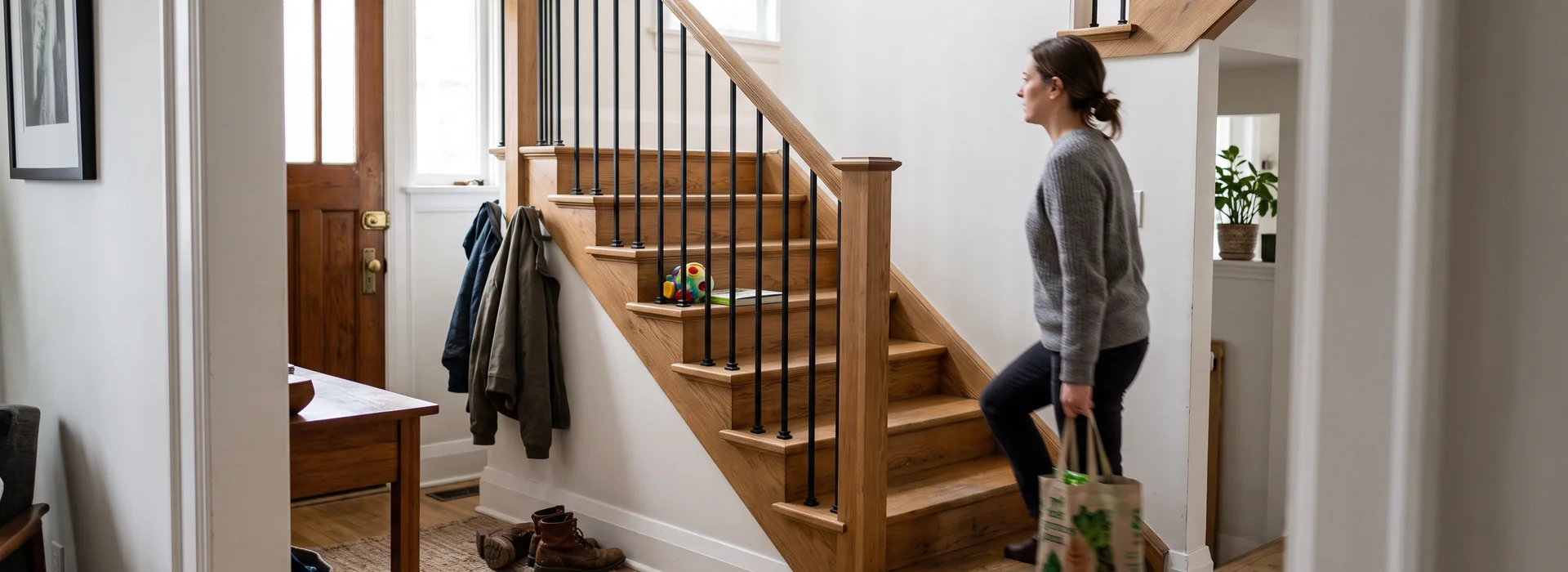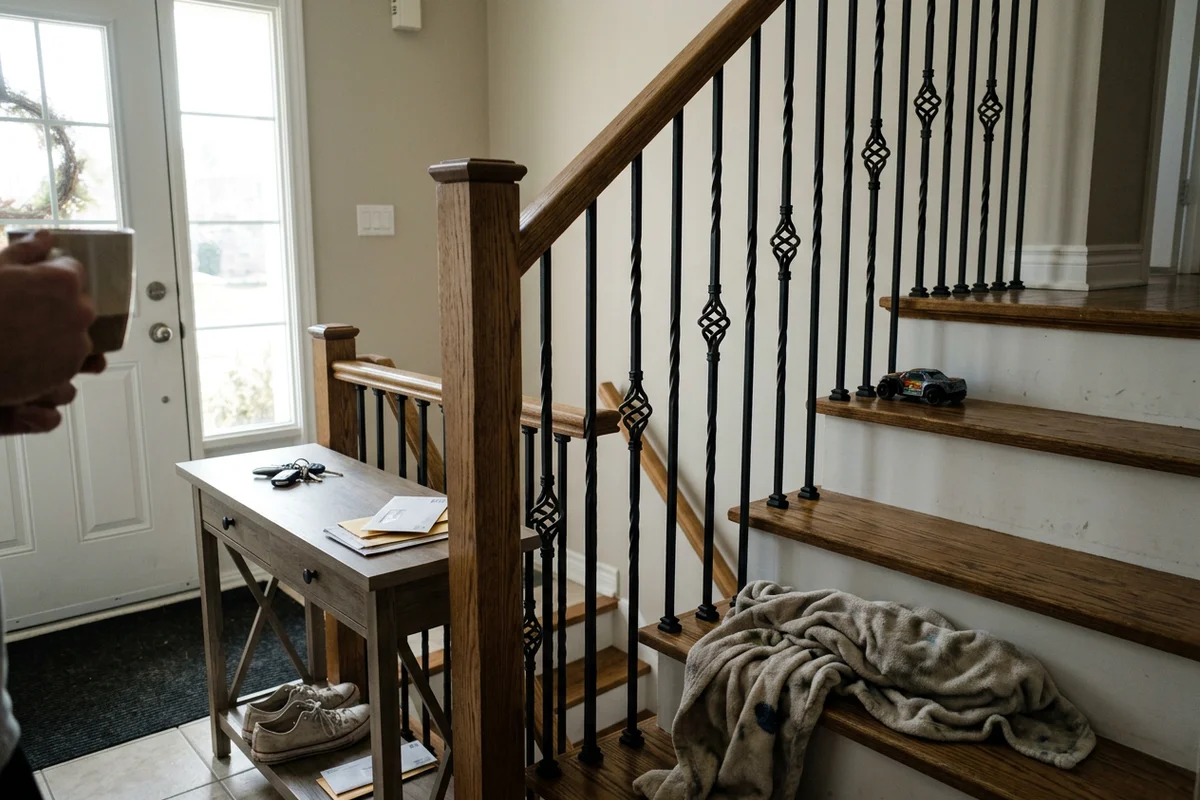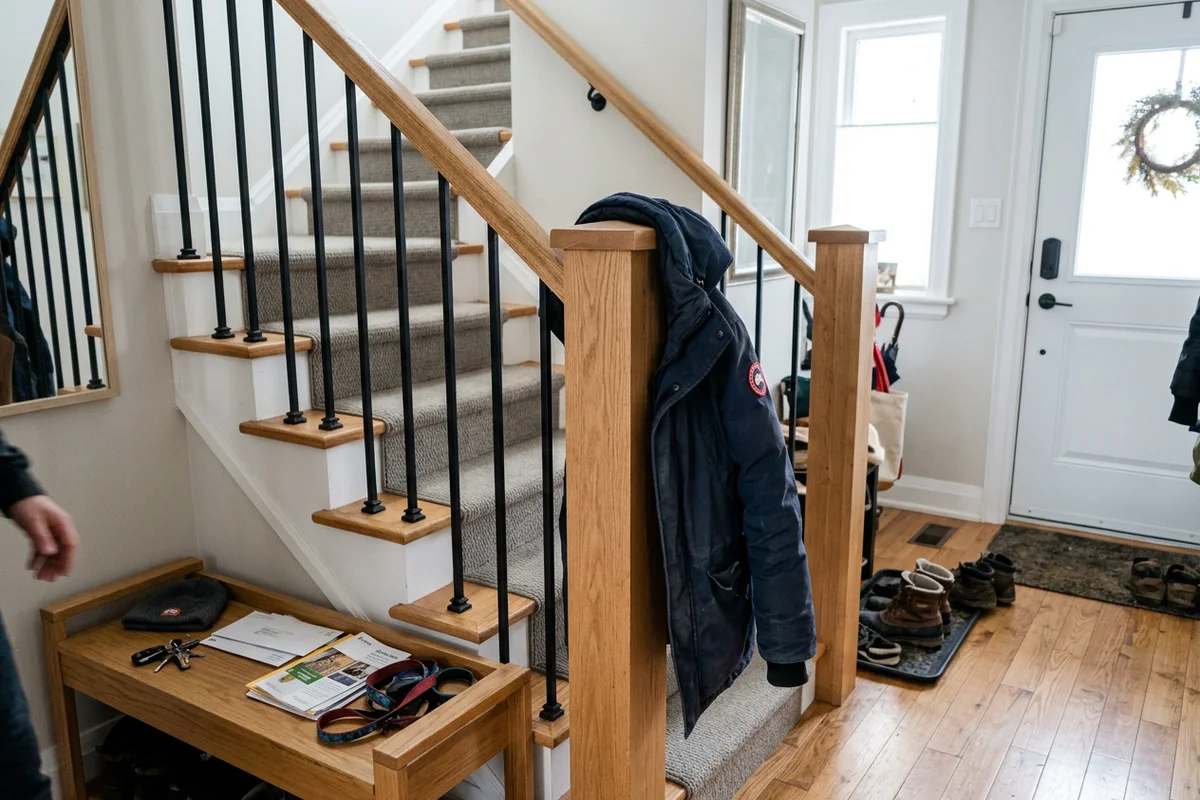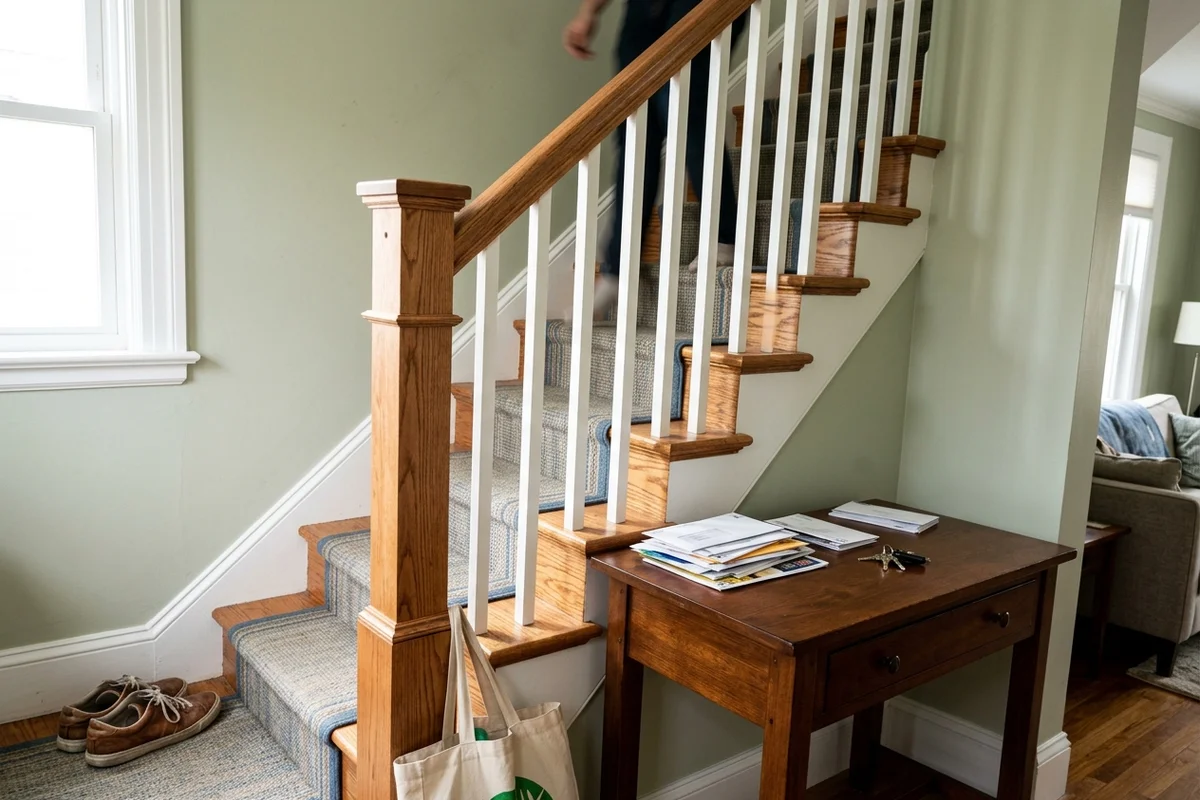
Staircase Renovation Toronto provides wood stair railing replacement, solid hardwood handrails, newel post and gooseneck installations and wall-mount basement stair handrails throughout Toronto, ON, backed by 22 years of staircase work across the GTA. We install solid handrails in red oak, white oak, hard maple, walnut or paint-grade poplar, with new newel posts, rosettes, gooseneck fittings over landings, and wall-mount rails on brackets fixed into studs. Every run is set to Ontario Building Code Section 3.4.6 for height and graspability, measured at the stair rather than copied from the old rail. Newels are anchored with a lag bolt into the floor joist below so the rail stays tight. Rails are stained to match your floor or new stair caps. Pricing runs $1,200 to $3,500 per railing run, and most jobs pair with iron baluster upgrades.
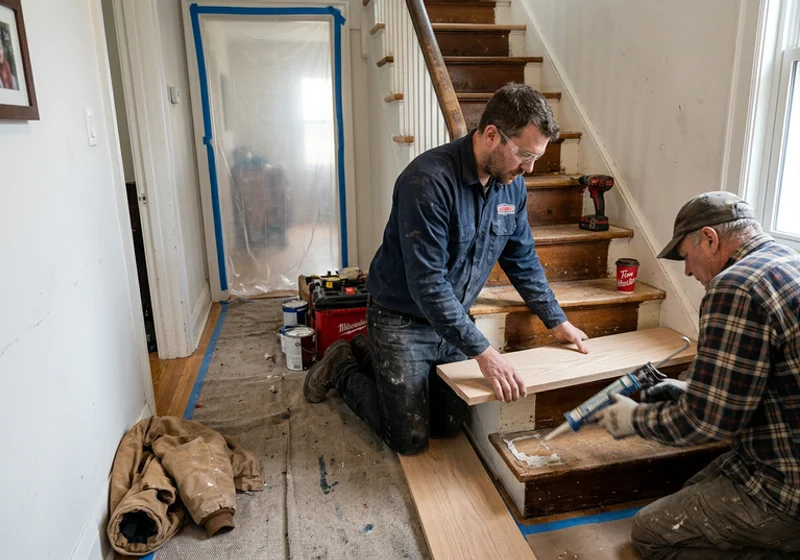
David and Helen in Rosedale wanted to keep the character of their Edwardian staircase but the old railing had been patched so many times it wobbled at every post. We refinished the original treads that could be saved, replaced the handrail with a hand-shaped oak profile close to the original, re-anchored the newels to the joists below, and finished the whole job in three weeks as quoted, at $16,500 including the refinishing.
What Does a Wood Stair Railing Replacement Include?
A stair railing is more than the handrail you hold. It’s the rail itself, the newel posts at the ends and landings, the fittings that connect them, and the balusters or wall brackets that hold it all in place. A wood railing replacement usually means:
- Removing the old rail and any failed fittings.
- Installing or re-anchoring newel posts so they don’t move.
- Fitting a new hardwood handrail with goosenecks or rosettes where the rail meets a post or wall.
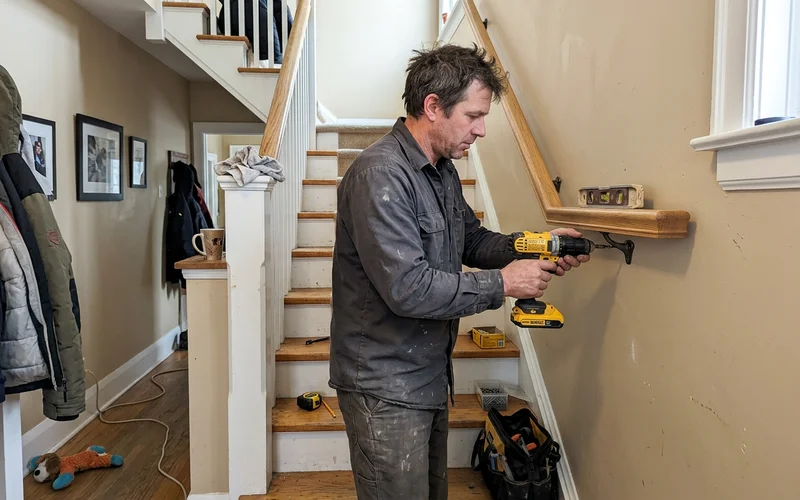
- Mounting wall rails on brackets screwed into studs, not drywall anchors.
- Staining or painting to match the rest of the staircase.
The part that matters most for safety is how it’s fixed. A beautiful rail on a loose newel or brackets in drywall will fail.
Types of Wood Railings We Install
| Type | Where it’s used | Notes |
|---|---|---|
| Open-side handrail on balusters | Foyers, main stairs | Needs solid newels at each end |
| Wall-mount handrail on brackets | Closed stairs, basements | Brackets fixed into studs |
| Continuous rail with goosenecks | Stairs with landings | No stop-start at each post |
| Over-post rail with volute | Traditional and curved stairs | Rail flows over the newels |
| Post-to-post rail | Transitional and modern stairs | Rail runs between square newels |
Wood Railing Cost Guide
| Cost factor | Toward $1,200 | Toward $3,500 |
|---|---|---|
| Rail type | Wall-mount, straight | Open side with balusters |
| Species | Poplar or red oak | White oak or walnut |
| Newels | Reuse existing | New starting and landing newels |
| Fittings | None | Goosenecks, volute, landing return |
| Finish | Pre-finished or paint | Stain matched on site |
When Should You Replace a Stair Railing?
Replace a railing when it’s loose at the newel or wall, when it isn’t graspable (a flat board or a wide decorative profile), when it’s lower than the code height range, or when you’re recapping the stairs and the old rail no longer matches. In older Toronto homes we often see rails that were fine for decades but were shortened or patched during earlier renovations.
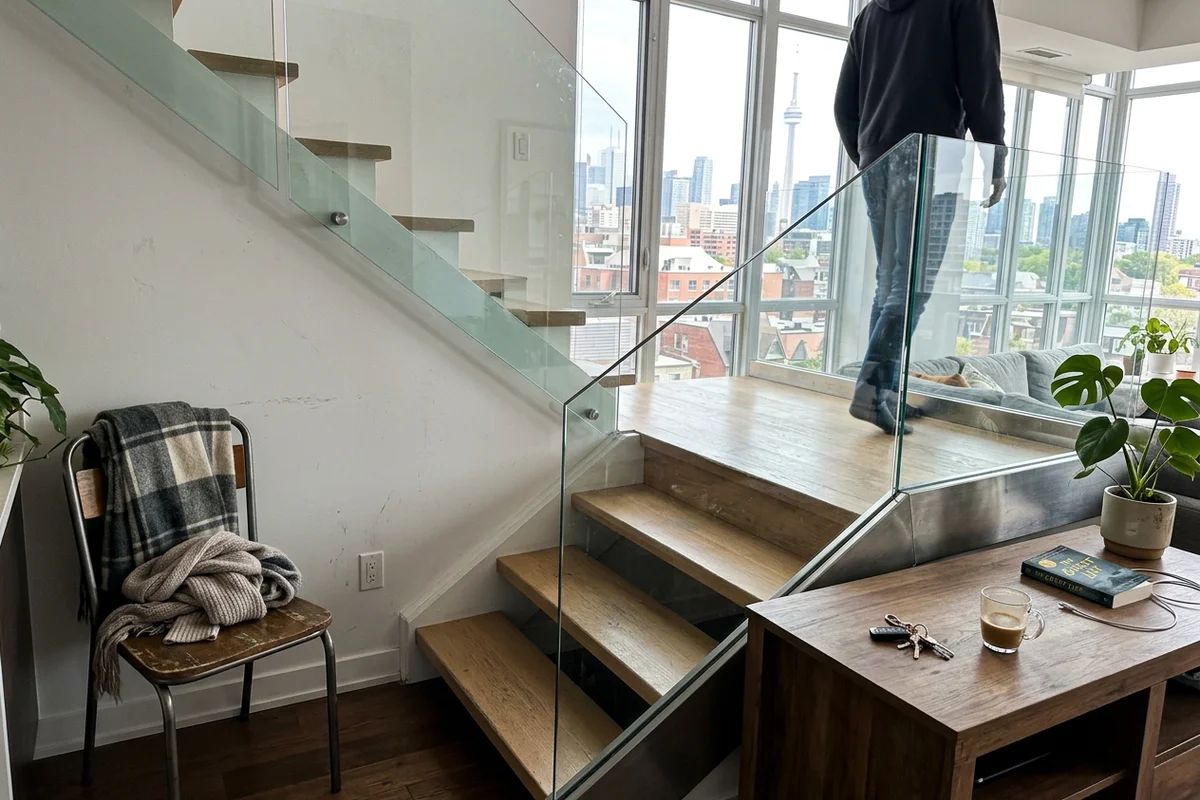
If only the newel wobbles, newel post replacement might be enough. If the spindles are the problem, see iron balusters. For a modern look, compare glass stair railings.
Wood vs Iron vs Glass Railings
| Wood railing run | Iron balusters | Glass railing | |
|---|---|---|---|
| Price | $1,200 to $3,500 per run | $1,500 to $3,800 per staircase | $3,500 to $9,000 per run |
| Style | Warm, traditional to transitional | Updated, open | Modern, fully open |
| Combines with | Iron or wood balusters | Existing or new wood rail | Wood or steel top cap |
Handrails and Ontario Building Code Section 3.4.6
Section 3.4.6 covers handrail height, continuity and graspability. In plain terms: the rail has to be at the right height above the tread nosing, you need to be able to wrap your hand around it, and it should run the full length of the stair. We measure and set every rail against those rules, and we’ll point out at the estimate if your current rail doesn’t meet them.